
By Femme Fatale TV
For decades, Wimbledon has been known for tradition.
White clothing.
Strawberries and cream.
Royal appearances.
Centre Court prestige.
But if you look beyond the scoreboards, something much bigger is happening.
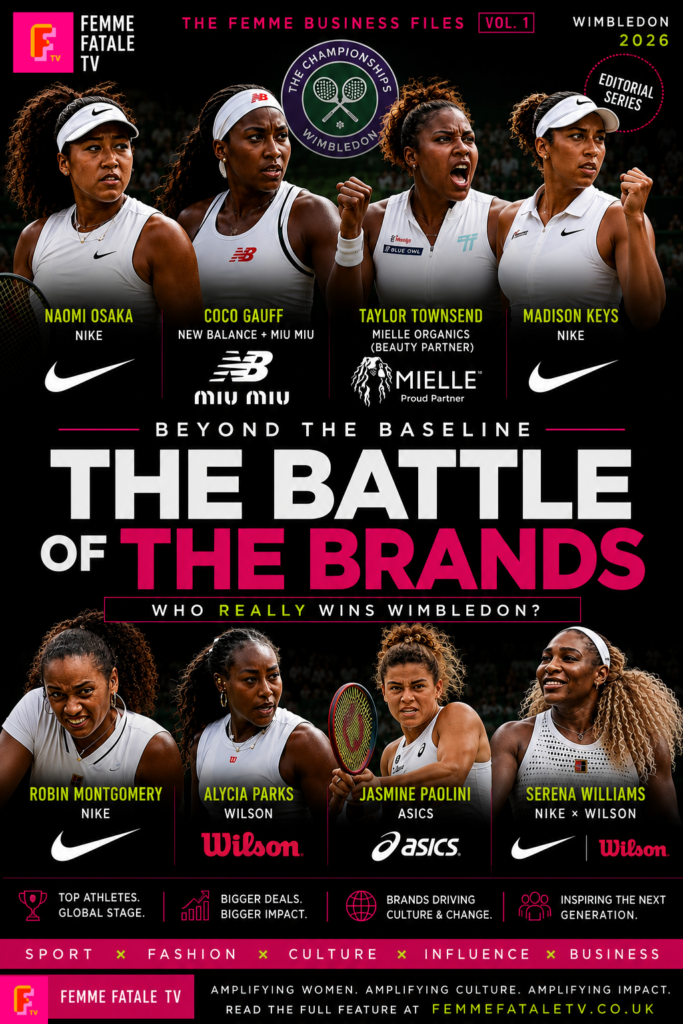
This year, some of the world’s most influential Black female athletes aren’t just competing for Grand Slam titles—they’re reshaping the relationship between sport, luxury fashion, culture and global branding.
And perhaps for the first time, Wimbledon feels less like a tennis tournament and more like a runway for innovation.
Beyond the Baseline
Women’s sport has entered a new era.
Brands are no longer simply sponsoring athletes to wear logos.
The smartest partnerships now tell stories.
Fashion houses, sportswear giants and beauty brands understand that today’s athletes are entrepreneurs, cultural icons and media platforms with audiences that rival television networks.
Every outfit becomes content.
Every walk through the tunnel becomes editorial.
Every post-match interview becomes a brand campaign.
The athlete has become the media.
Wimbledon Is Becoming A Fashion Capital
For years, the biggest fashion conversations happened courtside.
Now they’re happening on court.
Luxury houses are paying attention.
Beauty brands are paying attention.
Technology companies are paying attention.
The athlete arrival has become as culturally significant as the match itself.
Social media has changed everything.
One photograph can generate millions of impressions.
One outfit can dominate headlines.
One athlete can influence global fashion trends overnight.
The Bigger Opportunity
The real story isn’t which logo appears most often.
It’s what these partnerships represent.
Black women have historically been underrepresented in endorsement deals despite consistently driving culture across music, fashion and entertainment.
That is beginning to change.
Brands are recognising that authenticity generates stronger engagement than manufactured campaigns.
These athletes aren’t changing themselves for sponsorship.
The best brands are changing their marketing to celebrate who these women already are.
That’s a significant shift.
Nike Still Rules Centre Court
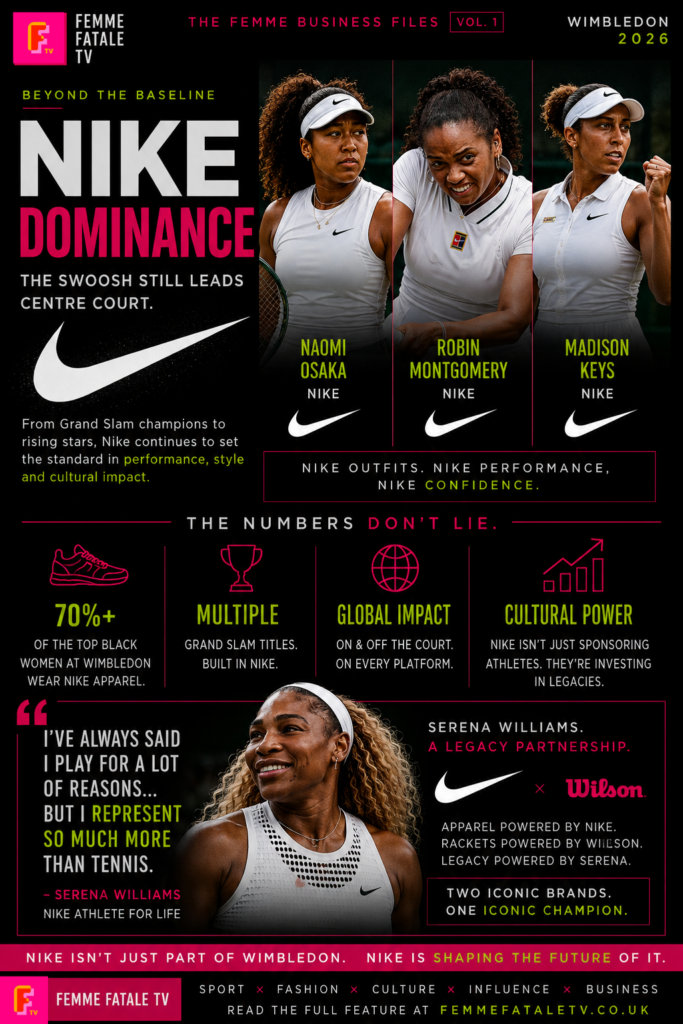
If there is one undeniable winner this year, it’s Nike.
Looking across many of the tournament’s biggest Black female stars, Nike continues to dominate the apparel conversation.
Athletes such as:
- Naomi Osaka
- Robin Montgomery
- Tyra Caterina Grant
- Madison Keys
- Serena Williams (through her long-standing Nike partnership)
all showcase Nike’s continued investment in elite female athletes.
Nike understands something many brands are only beginning to realise:
People don’t buy products.
They buy identity.
Nike isn’t simply dressing athletes.
It’s dressing ambition.
Naomi Osaka: The Future of Athlete Storytelling
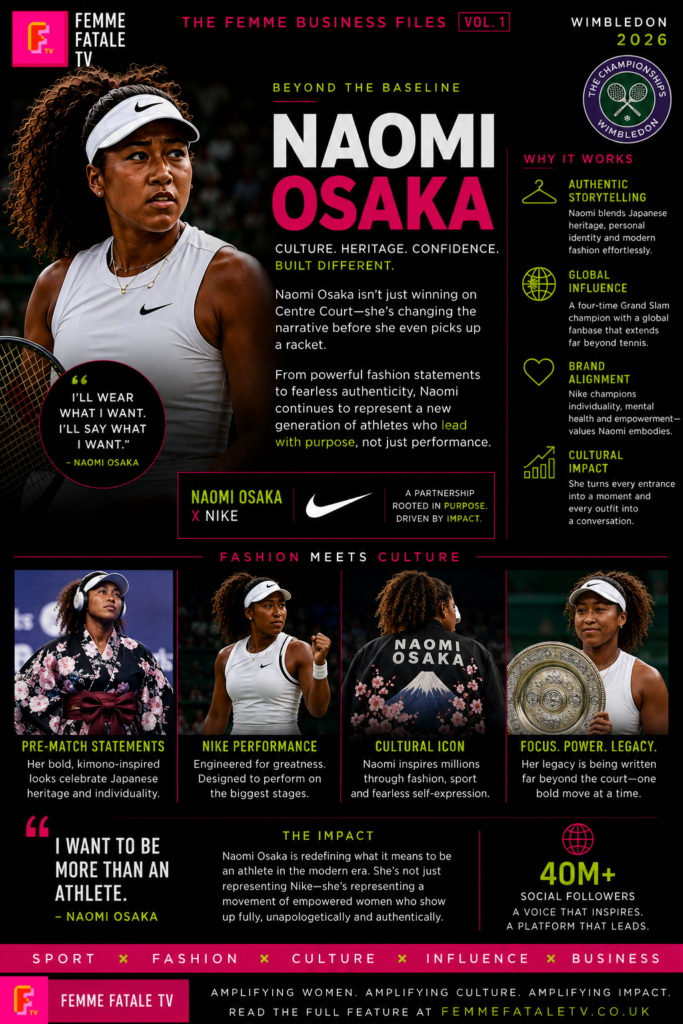
Perhaps nobody represents this shift better than Naomi Osaka.
Long before stepping onto the grass, Osaka had already won the fashion conversation.
Her custom pre-match kimono-inspired look wasn’t simply beautiful.
It was intentional.
It celebrated Japanese heritage.
It challenged what athletes “should” wear.
It transformed the arrival tunnel into a cultural moment.
Then she stepped onto court wearing Nike performance apparel designed for competition.
That transition—from cultural storytelling to elite performance—perfectly demonstrates where sport is heading.
Athletes are no longer expected to separate identity from competition.
They are encouraged to celebrate both.
Naomi isn’t simply wearing clothes.
She’s building a narrative.
Coco Gauff Is Creating A New Blueprint
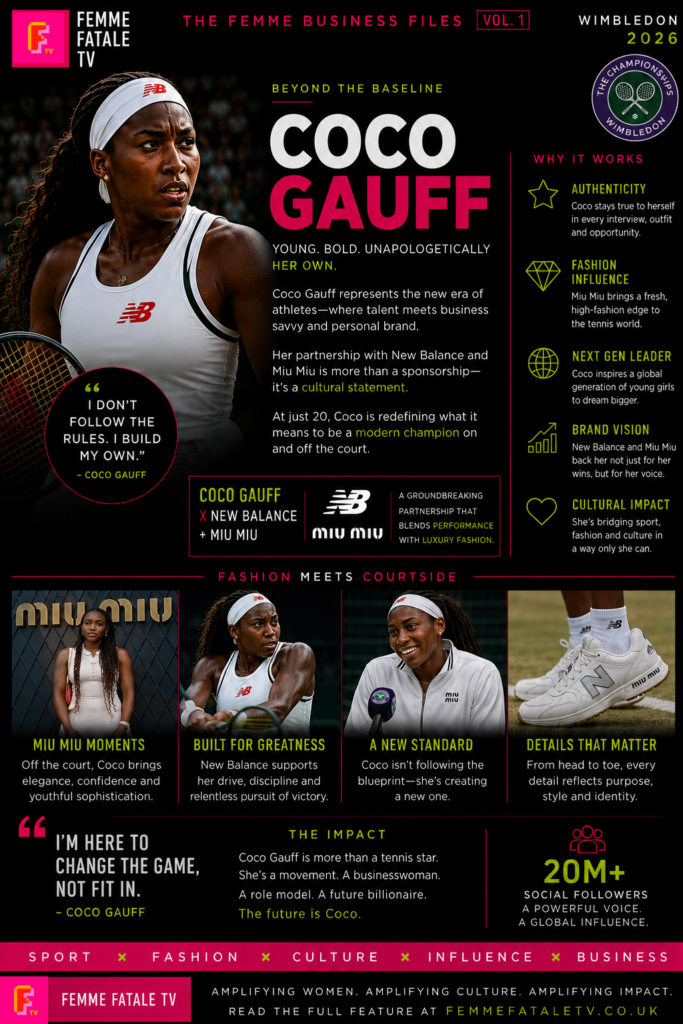
Another fascinating partnership belongs to Coco Gauff.
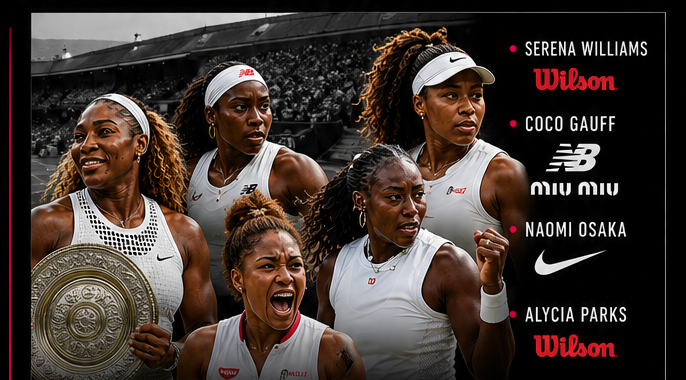
Rather than following the traditional route, she has helped redefine athlete collaborations through her partnership with New Balance, alongside luxury fashion house Miu Miu.
It’s one of the most exciting collaborations in modern sport.
Performance.
Luxury.
Youth culture.
Fashion credibility.
Editorial influence.
Instead of existing in separate worlds, they now complement one another.
It sends a powerful message:
Elite athletes can occupy both the sports pages and Fashion Week.
Wilson Proves Equipment Brands Can Build Personal Brands Too
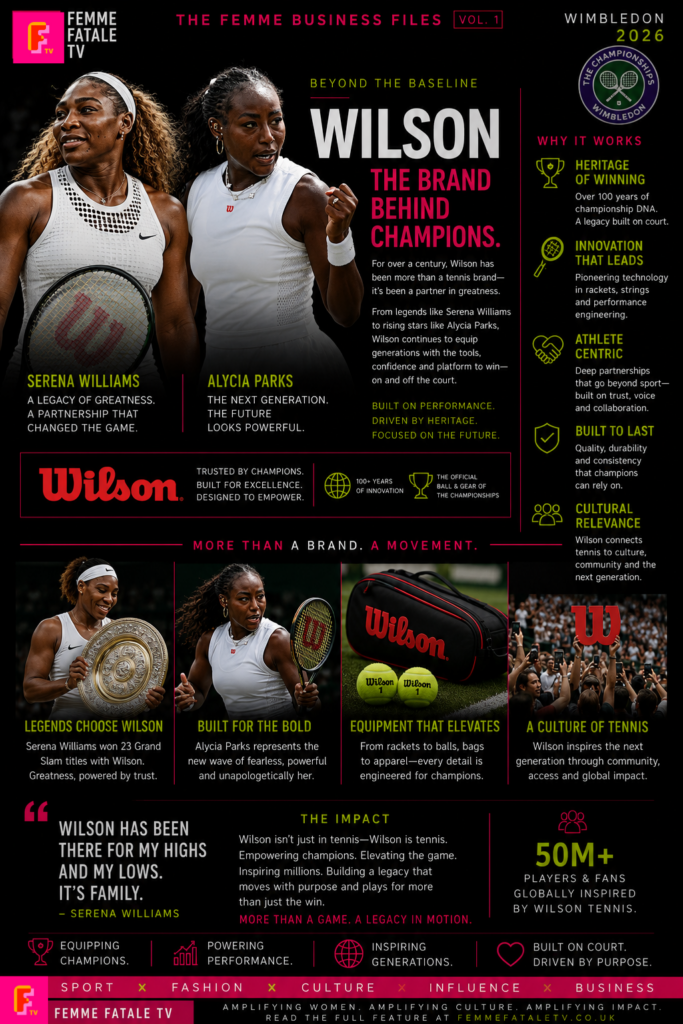
One brand quietly making significant moves is Wilson.
Traditionally recognised for rackets, Wilson has become increasingly visible through athletes like Alycia Parks and Serena Williams.
Instead of relying solely on product performance, Wilson has embraced personality-driven marketing.
As audiences become more emotionally connected to athletes, equipment brands also have an opportunity to become lifestyle brands.
Mielle Organics Shows The Power Of Authentic Partnerships
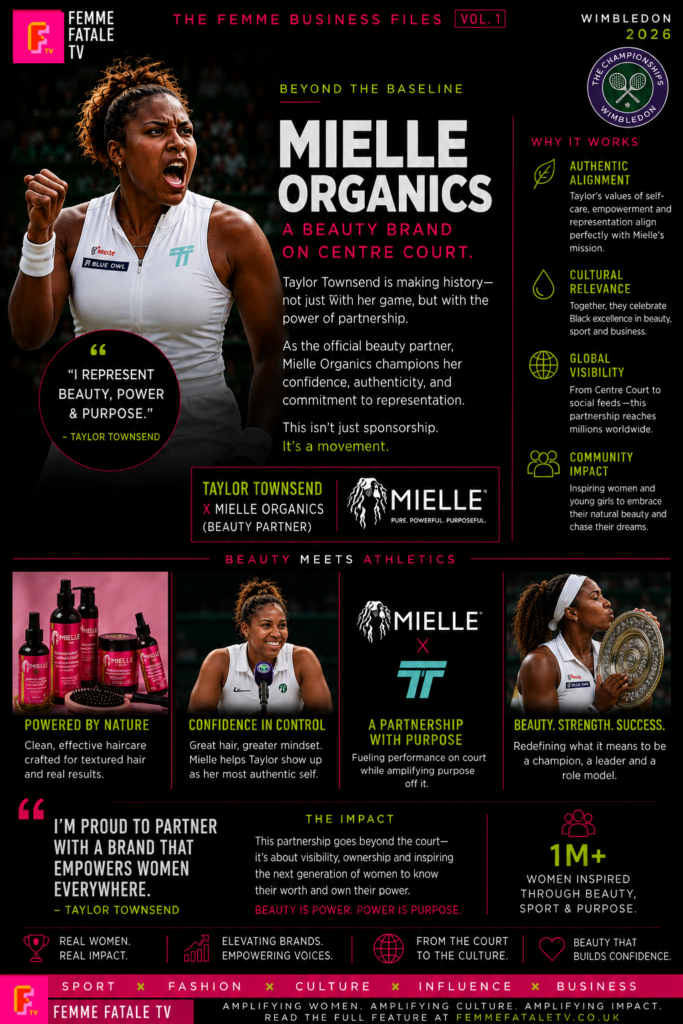
One of the most refreshing sponsorships comes from Mielle Organics.
Their partnership with Taylor Townsend feels genuine.
It isn’t simply about logo placement.
It celebrates Black beauty, textured hair and authenticity.
For years, Black women were expected to adapt to sporting environments that rarely reflected their lived experiences.
Brands like Mielle are helping change that.
Representation matters.
Especially when young girls can finally see products created with them in mind.
What Brands Should Learn
The brands winning today have several things in common:
- They invest in authentic storytelling, not just advertising.
- They celebrate athletes beyond competition.
- They embrace culture rather than borrowing from it.
- They understand that representation builds long-term loyalty.
- They recognise athletes as creators, not simply ambassadors.
The future belongs to brands willing to collaborate rather than control.
Femme Fatale TV’s Take
At Femme Fatale TV, we don’t just watch sport.
We analyse the intersection of sport, fashion, culture, business and influence.
Because behind every championship is a brand strategy.
Behind every outfit is a creative director.
Behind every partnership is a cultural conversation.
Wimbledon 2026 has shown us that the future of women’s sport isn’t just faster, stronger or more competitive.
It’s more creative.
And Black women continue to lead that evolution.
Join the Conversation
Which brand partnership impressed you most this Wimbledon?
Nike’s dominance
New Balance × Miu Miu
Wilson’s athlete partnerships
Mielle Organics’ authentic representation
ASICS’ performance-first approach
Let us know in the comments, and follow Femme Fatale TV as we continue exploring the stories where sport meets fashion, business and culture.